5 Best Steps to Prepare Natural Driftwood for Aquariums Safely
Table of Contents
- Introduction
- 1. Inspecting Your Natural Driftwood Specimen
- 2. Cleaning and Scrubbing Surface Debris
- 3. Boiling Driftwood to Sterilize and Leach Tannins
- 4. Soaking and Testing Water Saturation
- 5. Anchoring Prepared Timber in Your Tank Layout
- Expert Tips for Long-Term Hardscape Care
- Conclusion
Introduction
Adding raw Driftwood to a planted tank creates a striking, natural centerpiece that simulates authentic aquatic habitats. However, introducing uncurated timber into an active aquarium ecosystem can introduce harmful toxins, alter water chemistry, or cause unwanted water discoloration.
Learning how to properly clean, sterilize, and saturate your natural Driftwood before submerging it ensures your aquatic inhabitants remain healthy. Proper conditioning eliminates unwanted spores, washes away excess organic matter, and prevents pieces from floating uncontrollably.
In this step-by-step guide, we walk you through five essential conditioning methods. Discover how preparing your Driftwood correctly creates a stable, visually stunning environment for your freshwater tank.
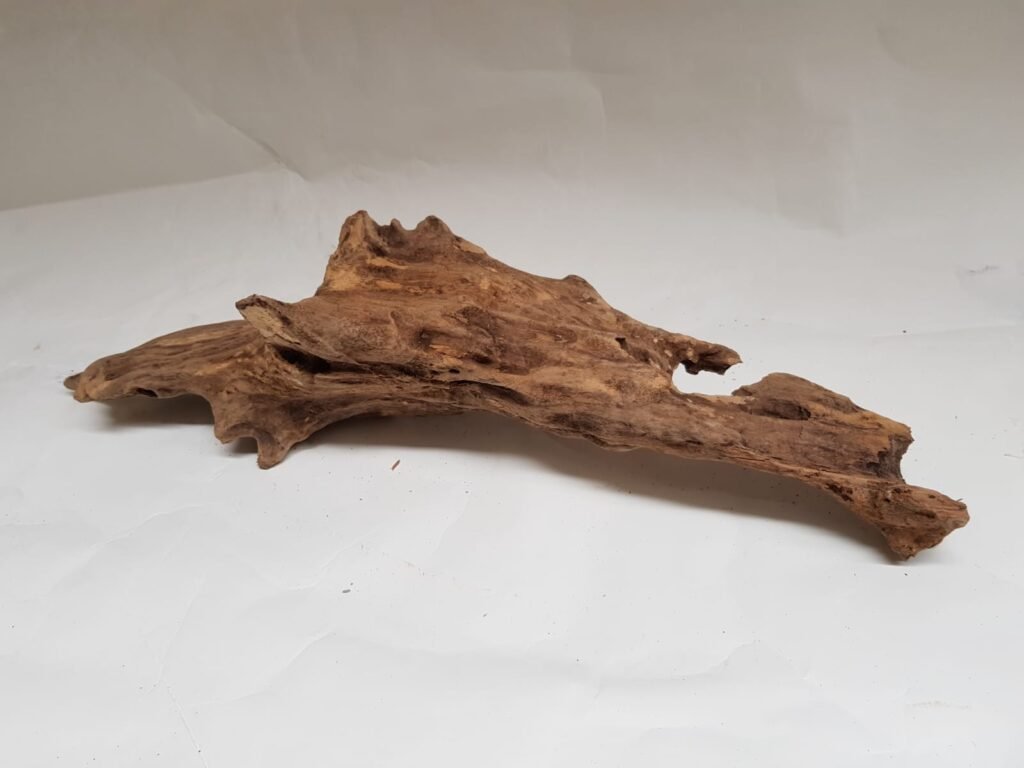
1. Inspecting Your Natural Driftwood Specimen
Before treating your hardscape material, perform a careful physical evaluation of the wood structure. Ensure the timber is completely dead and thoroughly dried throughout its inner core.
Soft or rotting sections must be removed immediately using a stiff bristle brush or chisel. High-grade Driftwood harvested from natural Indonesian waterways provides dense hardwood structures that resist rapid decay underwater.
2. Cleaning and Scrubbing Surface Debris
Begin the initial physical preparation by rinsing the timber under warm, clean tap water. Never use household soaps, detergents, or chemical cleaners, as these toxins penetrate porous wood fibers easily.
Scrub all deep crevices vigorously with a firm brush to remove trapped dirt, loose bark, and dry soil particles. Thoroughly brushing your Driftwood prevents cloudy water issues once the aquascape is filled.
3. Boiling Driftwood to Sterilize and Leach Tannins
Boiling is the most efficient sterilization method for any aquarium hardscape layout. Place the scrubbed Driftwood into a large stockpot filled with fresh water and bring it to a rolling boil.
Maintain the boil for at least 60 to 120 minutes depending on the branch thickness. Boiling neutralizes hidden fungal spores, bacteria, and pests while accelerating the leaching of organic tannins. Learn more about the natural chemical properties of tannins at Wikipedia.
4. Soaking and Testing Water Saturation
If your hardscape piece is too large for a pot, long-term soaking in a clean tub serves as an effective alternative. Fully submerge the Driftwood in fresh water, changing the water every few days as it darkens.
Soaking allows dry wood pores to absorb water completely until the branch becomes waterlogged. Once the Driftwood sinks naturally to the bottom without floating, it is fully saturated and ready for tank installation.
5. Anchoring Prepared Timber in Your Tank Layout
Even properly saturated timber can sometimes shift before plants root firmly into the substrate. You can anchor heavy pieces securely using stainless steel screws attached to slate tiles or non-toxic aquarium gel superglue.
Cover the base plate with gravel or active soil to conceal structural supports completely. Position your conditioned Driftwood strategically to allow adequate swimming space and easy maintenance access.
Expert Tips for Long-Term Hardscape Care
It is completely normal for a harmless white biofilm to form on newly submerged timber during the first two weeks. Beneficial algae-eating shrimp and nerite snails will clear this organic film naturally.
For premium export-grade timber crafted specifically for aquascaping and pets, visit our website to explore specialized collections. Following reliable hardscape standards preserves crystal-clear water and balanced pH parameters long term.
- Always use chemical-free fresh water during scrubbing and boiling stages.
- Monitored tannin release can be clear-filtered using activated carbon or Purigen.
- Verify that wood density is suitable for long-term underwater submersion.
Conclusion
Taking the time to sterilize and soak your natural Driftwood ensures a safe, successful aquascaping project. By following these five simple preparation steps, you create a healthy biological environment that thrives for years.
Explore high-quality natural wood products from JAVA WOOD TREE today to build your dream aquarium landscape with total confidence.