Table of Contents
- Benefits of Aquarium Aquascaping Root
- Popular Styles and Shapes
- How to Choose the Right Root
- Preparation and Placement Tips
- Using Root With Plants and Rocks
- Maintenance and Long-Term Use
Natural Aquarium Aquascaping Root: Benefits, Styles, and Uses
Natural aquascaping turns an ordinary fish tank into an underwater landscape with depth, texture, and visual movement. Aquarium Aquascaping Root is one of the most useful hardscape elements because it can create a natural focal point while giving aquatic plants a structure to grow around.
Why Root Matters in Aquascaping
Root wood adds irregular lines and organic texture that rocks or manufactured decorations cannot easily reproduce. Its branches can guide the viewer’s eye through the aquarium and help create foreground, midground, and background layers.
A well-selected piece can also provide surfaces where mosses and epiphytes can be attached. This makes the hardscape more integrated with the plants as the aquarium matures.
Benefits of Aquarium Aquascaping Root
The main advantage is design flexibility. Different shapes, sizes, and branch structures can support layouts ranging from minimalist displays to dense, forest-inspired aquascapes.
- Creates a natural focal point.
- Adds height, depth, and texture.
- Provides surfaces for aquatic plants and moss.
- Helps divide visual spaces inside the tank.
- Works with rocks, sand, gravel, and planted layouts.
Natural wood can also help an aquarium feel more connected to freshwater environments. However, every piece should be prepared properly and selected according to the aquarium’s size and livestock requirements.
Popular Styles and Shapes
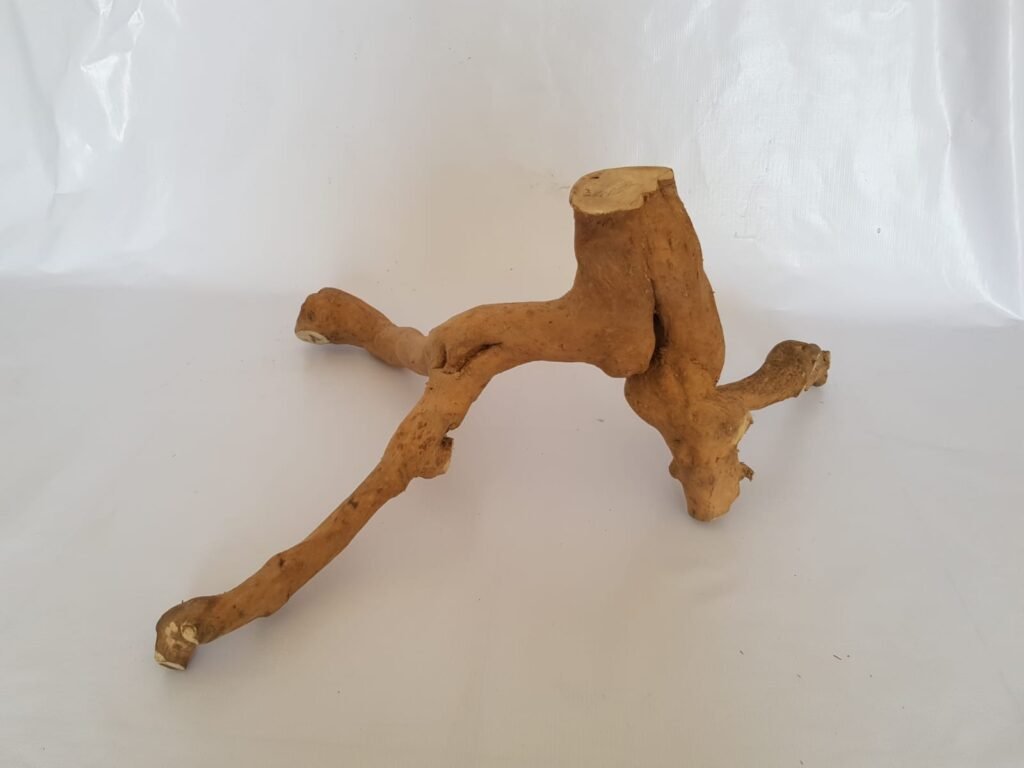
Aquarium Aquascaping Root is available in many natural forms. Branching pieces are popular for creating tree-like compositions, while twisted roots can produce dramatic movement and a sense of age.
Spider-like roots are useful when you want many fine branches extending across the substrate. Larger driftwood forms can become a dominant centerpiece in spacious aquariums, while compact pieces suit nano tanks.
When choosing a style, consider the viewing angle and the final height of the plants. The wood should support the composition rather than block important sightlines.
How to Choose the Right Root
Start by measuring the aquarium and deciding where the hardscape will sit. Aquarium Aquascaping Root should be proportional to the tank so the finished layout does not look crowded or visually unbalanced.
Look for stable wood with an interesting silhouette and enough attachment points for plants. Avoid pieces with excessive soft or decaying material, unpleasant odors, or structural weakness.
- Match the wood size to the aquarium dimensions.
- Check the shape from the main viewing angle.
- Plan space for plants and fish movement.
- Choose stable pieces that can be secured safely.
Preparation and Placement Tips
Before placing Aquarium Aquascaping Root in a tank, clean it thoroughly and follow an appropriate soaking or preparation process for the specific wood. Some pieces may initially float, so temporary weights or safe anchoring methods can help keep them positioned correctly.
Test the composition before adding plants or substrate permanently. Take a step back and check whether the branches create a clear focal point, open swimming areas, and enough negative space.
Using Root With Plants and Rocks
Combining wood with rocks can make an aquascape look more established and natural. Place larger elements first, then use smaller stones, substrate, and plants to soften transitions.
Mosses and epiphytic plants can be attached to suitable surfaces, while rooted plants can fill the surrounding substrate. The goal is to make the hardscape look like part of a living underwater environment rather than a separate decoration.
For additional background on aquascaping and aquatic ecosystems, explore Wikipedia. You can also visit our website to learn more about JAVA WOOD TREE and its product solutions.
Maintenance and Long-Term Use
Once Aquarium Aquascaping Root is established, inspect it periodically for loose sections, excessive algae, or areas that interfere with equipment. Gentle cleaning can help maintain its appearance without disturbing attached plants.
As plants grow, trim them selectively so the original wood structure remains visible. This keeps the aquascape balanced and allows the root to continue serving as a strong visual foundation.
Final Thoughts
Choosing the right Aquarium Aquascaping Root can transform the character of a planted aquarium. By considering shape, proportion, preparation, placement, and plant compatibility, aquascapers can build a natural composition that remains attractive as it matures.
Whether you prefer a minimalist layout, a forest-inspired scene, or a dramatic branching centerpiece, natural root offers a versatile foundation. Thoughtful planning will help every element work together while leaving enough space for aquatic life and healthy plant growth.