Table of Contents
- Benefits of Pine Bark
- Common Uses of Pine Bark
- How to Identify Quality Pine Bark
- 7 Tips for Choosing the Right Pine Bark
- Choosing a Reliable Supplier
Pine Bark: Benefits, Uses, and Quality Selection Guide
Pine Bark is a natural material commonly used in gardening, landscaping, horticulture, and other outdoor applications. Its natural appearance and useful physical properties make it a practical choice for both professional and home projects.
Choosing the right material requires attention to texture, cleanliness, moisture, size, and intended application. Understanding these factors can help buyers select suitable Pine Bark products for their specific requirements.
Benefits of Pine Bark
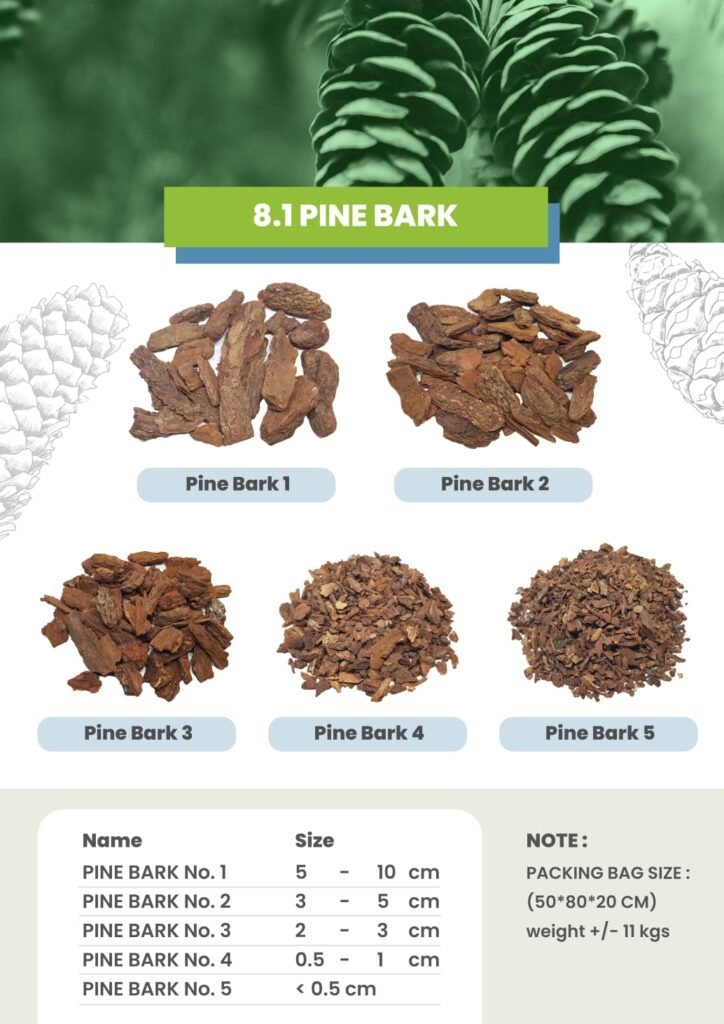
One of the main advantages of Pine Bark is its natural texture and attractive appearance. When used as a ground covering, it can create a clean and organic look that complements gardens, pathways, plant beds, and landscaped areas.
It can also help cover exposed soil and provide a protective layer around plants. Depending on particle size and application, pine bark materials can contribute to better moisture management and help reduce direct exposure of soil to weather conditions.
- Natural and attractive appearance
- Useful for landscaping and gardening applications
- Available in different sizes and textures
- Suitable for various outdoor projects
- Can provide a practical soil-covering layer
Common Uses of Pine Bark
Pine Bark can be used in several gardening and landscaping applications. Its versatility allows buyers to select different grades depending on whether the material is intended for decorative, horticultural, or general ground-covering purposes.
Common applications include garden beds, landscape areas, plant containers, nurseries, pathways, and commercial outdoor spaces. Particle size is particularly important because different applications may require fine, medium, or coarse material.
For general background information about pine trees and related natural materials, readers can explore Wikipedia as an external reference.
How to Identify Quality Pine Bark
Quality should be evaluated according to the intended use rather than appearance alone. Good Pine Bark should generally be reasonably clean, consistent in size, and free from excessive unwanted materials.
Buyers should also consider moisture levels, particle consistency, color, and packaging. For larger landscaping or wholesale requirements, consistency between batches can be especially important for maintaining a uniform result.
- Texture: Check whether the particle size matches the application.
- Cleanliness: Look for excessive dirt, foreign materials, or unwanted debris.
- Consistency: Evaluate whether the material has a relatively uniform grade.
- Moisture: Consider moisture condition during storage and transportation.
- Packaging: Choose packaging suitable for handling and shipping requirements.
7 Tips for Choosing the Right Pine Bark
Selecting suitable Pine Bark becomes easier when buyers establish their requirements before placing an order. The following seven tips can help guide the selection process.
- Define the application. Decide whether the material is intended for gardening, landscaping, nurseries, containers, or another purpose.
- Choose the right particle size. Fine, medium, and coarse grades can provide different visual and practical characteristics.
- Check material cleanliness. Avoid products containing excessive foreign materials or unwanted debris.
- Inspect consistency. A consistent grade can provide a more uniform appearance across larger projects.
- Consider moisture conditions. Discuss storage, packaging, and transportation requirements with the supplier.
- Review packaging options. Packaging should support safe handling, storage, and transportation.
- Confirm supply capacity. For commercial projects, make sure the supplier can provide consistent quantities and specifications.
Choosing a Reliable Supplier
For wholesale and commercial buyers, selecting a reliable supplier is just as important as choosing the material itself. A professional supplier should be able to explain available grades, packaging options, specifications, and order requirements.
Buyers should also discuss volume, delivery schedules, and product consistency before confirming a purchase. This is particularly useful when Pine Bark is required for recurring landscaping or horticultural projects.
For information about JAVA WOOD TREE and its available wood-related products, visit JAVA WOOD TREE.
Overall, selecting the right Pine Bark starts with understanding the intended application and checking important quality factors. By comparing particle size, cleanliness, consistency, packaging, and supplier capability, buyers can make a more informed purchasing decision.